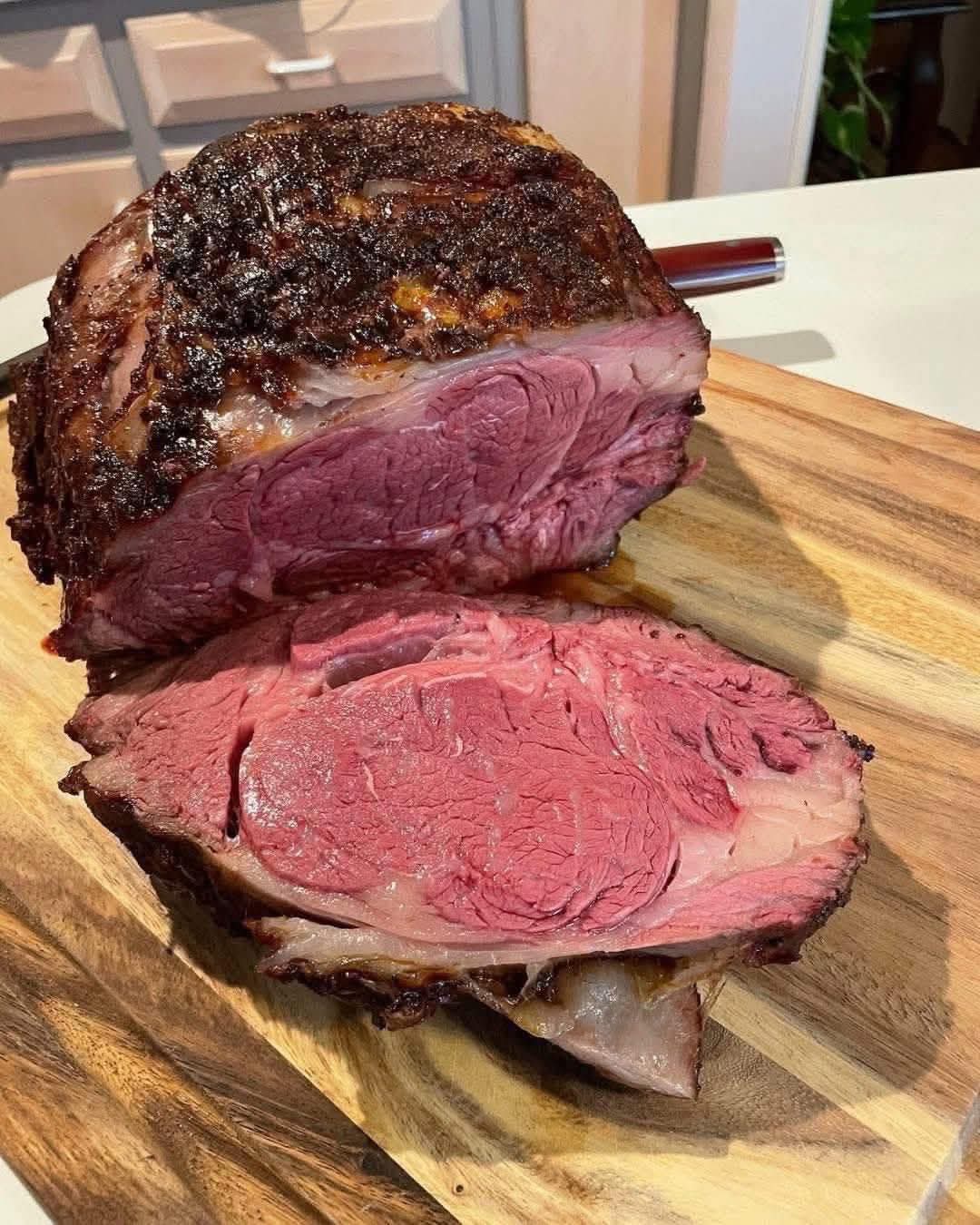
jus for the ultimate experience.
Tips for Success
Use a meat thermometer: It’s the best way to ensure your prime rib is perfectly cooked to your desired doneness.
Let it rest: Never skip the resting step! Cutting too soon can cause juices to run out.
Don’t over-season: Prime rib’s natural flavor is luxurious on its own — a balance of salt, herbs, and garlic is all you need.
Roast bone-in for more flavor: The bone helps insulate the meat, keeping it tender and enhancing its beefy richness.
How to Make the Perfect Au Jus
While the roast rests, place the roasting pan on the stove over medium heat. Add 1 cup of beef broth or stock to the drippings and stir, scraping up the brown bits for flavor. Let it simmer for 5–7 minutes, then strain and serve warm as a dipping sauce.
Choosing the Right Cut
When shopping for prime rib, look for well-marbled meat with a rich, deep red color and a thick layer of fat on top. “Prime” grade is the highest quality, but “Choice” grade also yields excellent results. If possible, ask your butcher for a roast with the bones still attached, as they enhance moisture and flavor during roasting.
How to Reheat Prime Rib Without Drying It Out
To reheat, wrap slices in foil with a few tablespoons of beef broth and warm them in a 250°F (120°C) oven until heated through. This gentle method keeps the meat tender and juicy.
Serving Ideas
Pair your prime rib with creamy mashed potatoes, roasted Brussels sprouts, or Yorkshire pudding for a traditional feast. A glass of bold red wine such as Cabernet Sauvignon or Merlot complements the rich, savory flavor perfectly.
Prime Rib Variations
Garlic Butter Prime Rib: Add melted butter and extra garlic to your rub for deeper richness.
Herb-Crusted Prime Rib: Combine breadcrumbs with herbs for a crisp outer coating.
Smoked Prime Rib: Slow-smoke the roast at 225°F for several hours for an unforgettable smoky depth.
Frequently Asked Questions
What’s the difference between prime rib and ribeye?
Both come from the same rib section, but ribeye steaks are sliced before cooking, while prime rib is cooked whole. Prime rib is juicier and more flavorful when served as a roast.
Can I prepare the prime rib ahead of time?
Yes. You can season the roast up to a day in advance and refrigerate it uncovered. This helps dry the surface slightly, creating an even crispier crust when roasted.
How do I get that perfect pink color?
For that classic rosy pink, remove the roast from the oven when it’s about 5°F below your target temperature. It will continue cooking slightly while resting.
Can I make prime rib without a roasting pan?
Yes — you can use a rimmed baking sheet with a wire rack placed on top. Just make sure the meat is elevated so air circulates evenly.
Why You’ll Love This Recipe
This prime rib recipe captures everything you want in a special-occasion meal: rich flavor, juicy texture, and an unforgettable presentation. It’s surprisingly easy to make, yet looks and tastes like something from a five-star restaurant. Whether it’s Christmas dinner, a family celebration, or just a Sunday treat, this roast will have everyone asking for seconds.
Conclusion
A perfectly roasted prime rib is the ultimate expression of comfort, celebration, and culinary craftsmanship. With its golden crust, tender center, and deep savory flavor, it’s a dish that defines special occasions. By following these simple steps, you can confidently serve a restaurant-quality prime rib right from your own kitchen. Pair it with your favorite sides, pour a glass of wine, and enjoy a meal that truly celebrates the joy of good food shared with people you love.