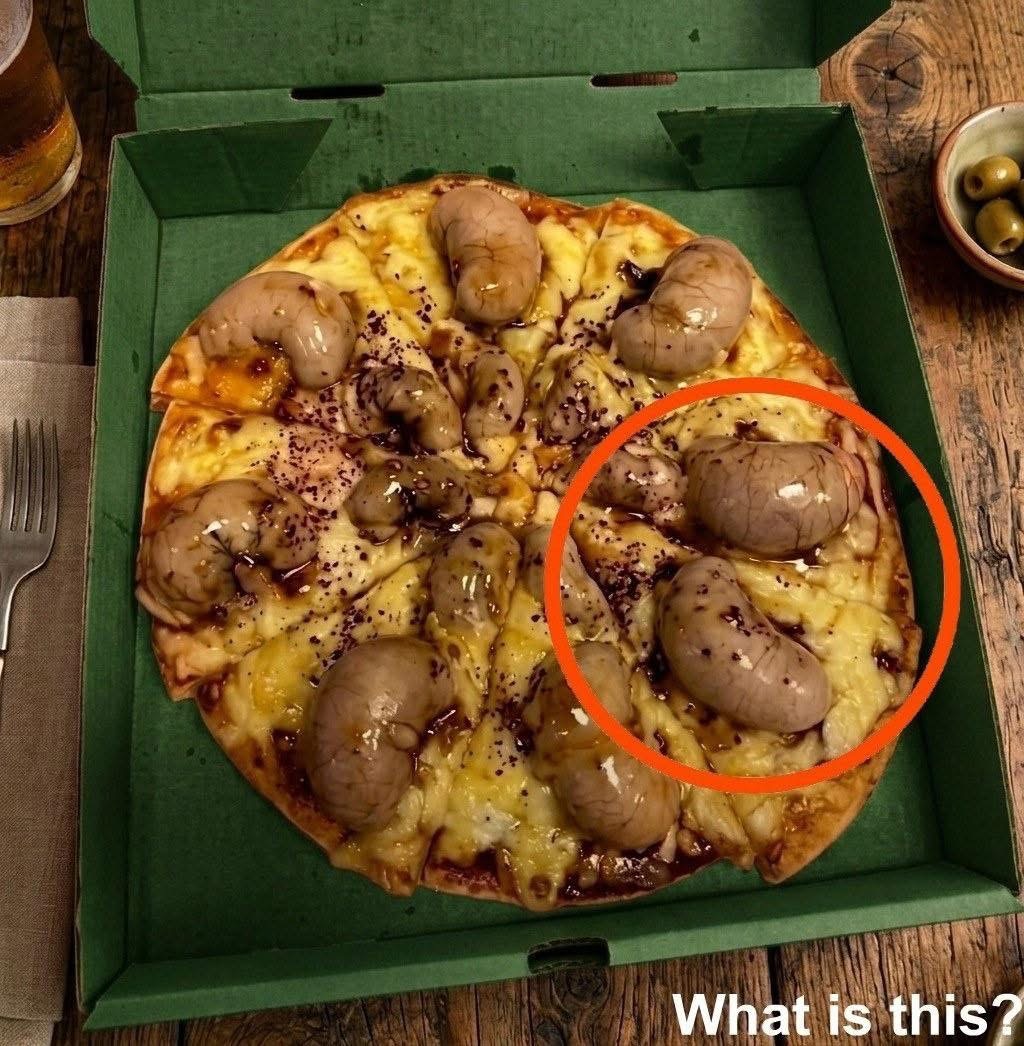
- Claim: “It’s mold or contamination!”
- Truth: Often caused by lycopene (a natural pigment in tomatoes) reacting with alkaline dough or baking soda.
→ Harmless color change—common in deep-dish or thick-crust pizzas.
⚠️ When to Actually Worry
While most “weird” pizza traits are normal, true spoilage signs include:
- Fuzzy mold (green, black, or blue) on sauce, cheese, or crust
- Sour, rancid, or ammonia-like odor
- Slimy texture that’s sticky or stringy (not just wet)
- Left unrefrigerated for >2 hours (or >1 hour in hot weather)
✅ Rule of thumb: If it smells off or looks fuzzy—toss it. If it just looks “shiny” or has white specks—it’s likely fine.
❤️ The Real “Scary” Truth? Food Misinformation
Viral fear-mongering about food erodes trust in safe, regulated products—and distracts from real food safety issues, like:
- Undercooked meat (risk of salmonella)
- Cross-contamination in kitchens
- Improper storage of leftovers
Instead of fearing your pizza, know your sources:
- Buy from reputable pizzerias or grocers
- Store leftovers within 2 hours
- Reheat to 165°F (74°C) for safety
Final Thought
“Your pizza isn’t hiding secrets—it’s sharing centuries of culinary craft.”
Those white spots? A sign of aging. That glossy cheese? Science helping flavor shine.
So enjoy your slice with confidence—not fear. Because the only thing truly “scary” is letting myths steal your joy. 🍕✨