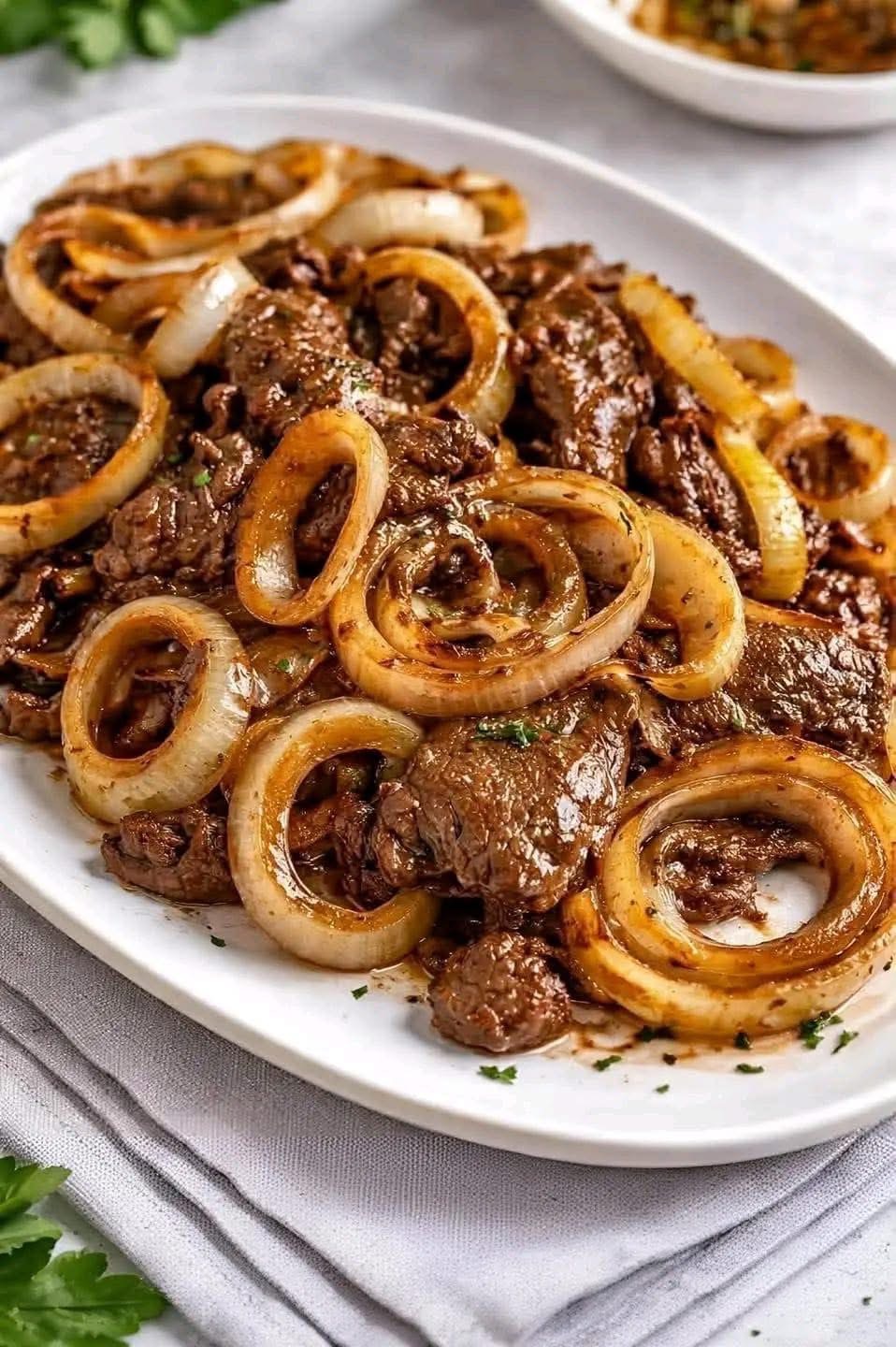
DOES ANYONE HERE ACTUALLY WOULDEAT? Oh, you bet your sweet, savory soul we would! And after one bite of this incredible Caramelized Onion & Beef Stir-Fry, you’ll be shouting the same thing from the rooftops. Forget everything you thought you knew about onions being a mere background player; in this dish, they are the undisputed star, transformed by the magic of slow cooking into something utterly transcendent. Paired with succulent, perfectly seared beef and coated in a rich, umami-packed sauce, this isn’t just a meal; it’s a revelation, a testament to the power of simple ingredients elevated to extraordinary heights.
This dish is a masterclass in flavor development, showcasing how patience and a little culinary know-how can turn humble ingredients into a symphony on your plate. The deep, almost jammy sweetness of the caramelized onions provides the perfect counterpoint to the savory, robust beef. It’s a comforting, hearty meal that feels both familiar and exciting, perfect for a weeknight dinner or a special occasion. Prepare to fall head over heels for a dish that proves, once and for all, that a generous amount of onions is not just acceptable, but absolutely essential for culinary bliss.
So, if you’ve ever doubted the transformative power of a perfectly caramelized onion, prepare to have your mind, and your taste buds, completely blown. This recipe is designed to convert even the most onion-averse among us, proving that when cooked with care, they become a sweet, tender, and incredibly delicious component that ties the entire dish together. Get ready to embrace the onion love, because once you try this Caramelized Onion & Beef Stir-Fry, there’s no going back.
Nutritional Information
Per serving (approximate values):
- Calories: 480
- Protein: 45g
- Carbohydrates: 28g
- Fat: 20g
- Fiber: 4g
- Sodium: 950mg
Ingredients
- 2 lbs beef sirloin, flank steak, or ribeye, thinly sliced against the grain
- 3 large yellow onions (about 3 lbs), thinly sliced
- 2 tablespoons olive oil, divided
- 1 tablespoon unsalted butter
- 1 teaspoon salt, divided
- ½ teaspoon black pepper, divided
- 2 cloves garlic, minced
- 1-inch piece fresh ginger, grated (optional)
- ½ cup beef broth
- ¼ cup soy sauce (or tamari for gluten-free)
- 2 tablespoons brown sugar, packed
- 1 tablespoon rice vinegar
- 1 teaspoon sesame oil
- 1 tablespoon cornstarch, mixed with 2 tablespoons cold water (cornstarch slurry)
- Fresh parsley or chives, chopped, for garnish
- Cooked rice or noodles, for serving
Instructions
- Prepare the Beef: Pat the thinly sliced beef dry with paper towels. In a medium bowl, toss the beef with ½ teaspoon salt and ¼ teaspoon black pepper. Set aside.
- Caramelize the Onions: Heat 1 tablespoon of olive oil and the unsalted butter in a large, heavy-bottomed pan or Dutch oven over medium-low heat. Add the thinly sliced onions and ½ teaspoon salt. Stir to coat.
- Cook the onions slowly for 30-45 minutes, stirring occasionally, until they are deeply golden brown, soft, and sweet. This process cannot be rushed; low and slow heat is key to true caramelization. If they start to stick, add a tablespoon of water to deglaze the pan.
- Once the onions are beautifully caramelized, remove them from the pan and set aside in a bowl.
- Sear the Beef: Increase the heat to medium-high. Add the remaining 1 tablespoon of olive oil to the same pan. Once the oil is shimmering, add the beef in a single layer, being careful not to overcrowd the pan. You may need to do this in 2-3 batches to ensure a good sear.
- Sear the beef for 1-2 minutes per side until nicely browned. Do not overcook. Remove the seared beef from the pan and add it to the bowl with the caramelized onions.
- Build the Sauce: Reduce the heat to medium. Add the minced garlic and grated ginger (if using) to the pan, and sauté for 30 seconds until fragrant.
- Pour in the beef broth, soy sauce, brown sugar, and rice vinegar. Bring the mixture to a simmer, scraping up any browned bits from the bottom of the pan with a wooden spoon.
- Stir in the sesame oil.
- Thicken the Sauce: Give the cornstarch slurry a quick whisk to ensure it’s well mixed, then slowly pour it into the simmering sauce, stirring constantly. Continue to stir until the sauce thickens to your desired consistency, about 1-2 minutes.
- Combine and Finish: Return the seared beef and caramelized onions to the pan with the thickened sauce. Toss everything gently to coat the beef and onions evenly.
- Simmer for another 2-3 minutes to allow the flavors to meld and the beef to warm through. Taste and adjust seasoning if necessary (add more salt, pepper, or a pinch of sugar if desired).
- Serve: Garnish generously with fresh chopped parsley or chives. Serve immediately over hot steamed rice or noodles.
Cooking Tips and Variations
Onion Patience is a Virtue: The most critical step in this recipe is the caramelization of the onions. Do not rush this process by increasing the heat. Low and slow heat (medium-low) is essential for developing that deep, sweet, complex flavor. If you try to rush it, you’ll end up with browned, slightly bitter onions, not sweet caramelized ones. Stir them every 5-7 minutes to prevent burning and ensure even cooking. If they start to dry out or stick too much, add a tablespoon of water or beef broth to help deglaze the pan and prevent scorching. Different types of onions will yield slightly different results; yellow onions are classic, but sweet onions (like Vidalia) will become even sweeter, and red onions offer a slightly sharper, more vibrant color.
Beef Preparation for Tenderness: For the most tender beef, ensure you slice it thinly against the grain. This shortens the muscle fibers, making the beef easier to chew. If you’re having trouble slicing it thinly, pop the beef into the freezer for 20-30 minutes before slicing; it will firm up and be much easier to cut. When searing the beef, use a very hot pan and do not overcrowd it. Overcrowding lowers the pan’s temperature, leading to steaming rather than searing, which results in grey, tough meat. Work in batches if necessary, allowing enough space for the beef to brown beautifully and develop that delicious Maillard crust.
Flavor Boosters and Enhancements: While the recipe is delicious as written, feel free to experiment. A dash of Worcestershire sauce can add extra umami to the sauce. For a spicier kick, add a pinch of red pepper flakes with the garlic and ginger, or a drizzle of sriracha at the end. A splash of dry sherry or red wine can also add depth to the sauce during the deglazing stage. You can also add a teaspoon of Dijon mustard to the sauce for a subtle tang and emulsifying agent.
Veggie Boost: To make this a more complete meal, consider adding other vegetables. Sliced mushrooms can be sautéed after the onions and before the beef, adding another layer of umami. Bell peppers (red, yellow, or orange) can be stir-fried quickly after the beef to retain some crunch and color. Snow peas or blanched broccoli florets can be tossed in during the final minutes of cooking.
Different Cuts of Beef: While sirloin, flank, or ribeye are excellent choices for their tenderness and flavor, you can also use other cuts. Beef chuck or brisket, while requiring longer cooking times (more of a braise than a stir-fry), can also be transformed into a melt-in-your-mouth dish with caramelized onions. Just adjust the cooking method to a slow braise in the sauce until fork-tender. Pork tenderloin, sliced thinly, also works wonderfully as a substitute for beef.
Gluten-Free Option: Simply swap out regular soy sauce for tamari to make this dish entirely gluten-free without sacrificing any flavor. Ensure your beef broth is also gluten-free.
Serving Suggestions: This dish is incredibly versatile. It’s fantastic served simply over steamed white or brown rice to soak up all that delicious sauce. For a heartier meal, consider serving it with creamy mashed potatoes, crusty bread to sop up the juices, or even tossed with wide egg noodles. A side of simple steamed green beans or asparagus would complete the meal beautifully.
Storage and Reheating
Storage: Leftovers of Caramelized Onion & Beef Stir-Fry can be stored in an airtight container in the refrigerator for up to 3-4 days. Ensure the dish has cooled completely before transferring it to the container to prevent condensation and maintain freshness.
Reheating: For best results, reheat the stir-fry gently on the stovetop. Place the desired portion in a pan over medium-low heat. Add a splash of beef broth or water (1-2 tablespoons) to help prevent drying out and to loosen the sauce. Stir occasionally until heated through. You can also reheat it in the microwave; place the stir-fry in a microwave-safe dish, cover loosely, and heat in 1-minute intervals, stirring in between, until hot. Be careful not to overheat the beef, as this can make it tough. The onions, however, reheat beautifully and often taste even better the next day as the flavors have more time to meld.
Frequently Asked Questions
Can I use different types of onions for this recipe?
Absolutely! While yellow onions are recommended for their balanced flavor and excellent caramelization properties, sweet onions (like Vidalia) will yield an even sweeter dish, and red onions will add a slightly sharper, more vibrant flavor. Feel free to experiment with what you have on hand or what you prefer. The key is the slow cooking process, regardless of the onion variety.
My onions aren’t caramelizing, they’re just browning quickly. What am I doing wrong?
This is a common issue! The most likely culprit is that your heat is too high. True caramelization requires patience and low to medium-low heat. If the heat is too high, the onions will brown and even burn before their natural sugars have a chance to break down and sweeten. Ensure you’re cooking them slowly, stirring occasionally, and if they start to stick or brown too fast, reduce the heat further or add a tablespoon of water or broth to deglaze the pan and slow down the process.
Can I prepare parts of this dish in advance?
Yes, you can! The caramelized onions can be made a day or two in advance and stored in an airtight container in the refrigerator. This is a great time-saver, as caramelizing onions is the longest step. You can also slice the beef and prepare the sauce ingredients ahead of time. However, it’s best to sear the beef and combine everything with the sauce just before serving to ensure the beef remains tender and the dish is fresh.
How can I make this dish spicier?
There are several ways to add heat! You can add a pinch of red pepper flakes to the pan along with the garlic and ginger. For a more direct heat, drizzle some sriracha or your favorite chili oil over the finished dish. You can also incorporate a finely diced jalapeño or serrano pepper when sautéing the aromatics for a fresh, spicy kick.
What’s the best way to slice the beef for tenderness?
Always slice beef against the grain. The “grain” refers to the long muscle fibers you can see running through the meat. Cutting against these fibers shortens them, making the beef much more tender and easier to chew. If you slice with the grain, the fibers remain long, resulting in a tougher texture. For easier slicing, you can partially freeze the beef for about 20-30 minutes before cutting; it will firm up and be less slippery.